
Table of Contents
- The Basics of Whisky Production
- Whisky Ingredients: The Roles of Malt, Water, and Yeast
- What are the Necessary Steps in Whisky Production?
- A Detailed Explanation of the Whisky Production Process
- Mashing: The Magic of Turning Malt into Sugar
- Fermentation: Aromas and Alcohol Created by Yeast
- Distillation: The Process of Condensing Flavor
- Maturation: The Magic of the Cask Completes the Whisky
- Bottling: The Final Step to Commercializing Whisky
- Key Points and Innovations in Whisky Making
- Commitment to Ingredient Selection
- Equipment for Whisky Production
- Factors That Influence Aroma and Taste
- Summary
1. The Basics of Whisky Production
Whisky Ingredients: The Roles of Malt, Water, and Yeast
Whisky production begins with three simple ingredients.
Understanding the role of each helps clarify how the diverse flavors of whisky are born.
Malt Malt is primarily made from two-row barley.
By germinating and then drying the barley, the enzymes necessary for saccharification (mashing) are activated.
This creates “wort,” a liquid with clear sweetness and a unique flavor.
Using peated malt can also add a smoky aroma.
Water Water can be called the lifeline of whisky production.
The quality of the water used during mashing, fermentation, distillation, and even maturation has a major impact on the final taste of the whisky.
Soft water from Scotland and clear water from Japan’s mountainous regions are typical examples.
Yeast Yeast, which plays a critical role in the fermentation process, converts the sugars in the wort into alcohol and flavor compounds.
Since the type of yeast and fermentation conditions determine the aroma and flavor of the whisky, each distillery makes its own unique selection.
What are the Necessary Steps in Whisky Production?
Before whisky is completed, it undergoes the following five major steps.
Mashing Malt is crushed (milled) and mixed with hot water, allowing enzymes to convert starch into sugar.
The liquid obtained in this process, called “wort,” becomes the foundation of whisky production.
Fermentation Fermentation begins by adding yeast to the wort.
Sugars are converted into alcohol and flavor compounds, creating a fermented liquid (wash) with an alcohol content of 5–10%.
Distillation The wash is heated in a still to condense the alcohol and aromatic compounds.
In malt whisky production, distillation is generally performed twice to obtain high-purity spirits.
Maturation The distilled spirit is placed in wooden casks and aged for several years to several decades.
During this time, the spirit absorbs components from the wood, enriching its color and flavor.
Bottling The aged whisky is filtered, its alcohol content is adjusted, and it is bottled.
This completes the product for sale.
2. A Detailed Explanation of the Whisky Production Process
Mashing: The Magic of Turning Malt into Sugar
The first step in whisky production is “mashing.”
In this process, crushed malt (grist) is mixed with hot water to convert starch into sugar.
The saccharifying enzymes contained in the malt are activated by the hot water, producing sweet wort.
This sweetness becomes the energy source for yeast to produce alcohol in the subsequent fermentation step.
Temperature control during mashing is extremely important; maintaining an appropriate temperature (about 60–70°C) allows for efficient extraction of sugars.
Fermentation: Aromas and Alcohol Created by Yeast
When yeast is added to the wort obtained from mashing, fermentation begins.
Yeast decomposes the sugars in the wort, generating not only alcohol and carbon dioxide but also flavor compounds like esters and aldehydes that determine the whisky’s character.
This fermentation process takes about 2 to 3 days, yielding a wash with an alcohol content of 5–10%.
Since the material of the washback (fermentation tank) and temperature control affect the final flavor, many distilleries manage this process with great care.
Distillation: The Process of Condensing Flavor
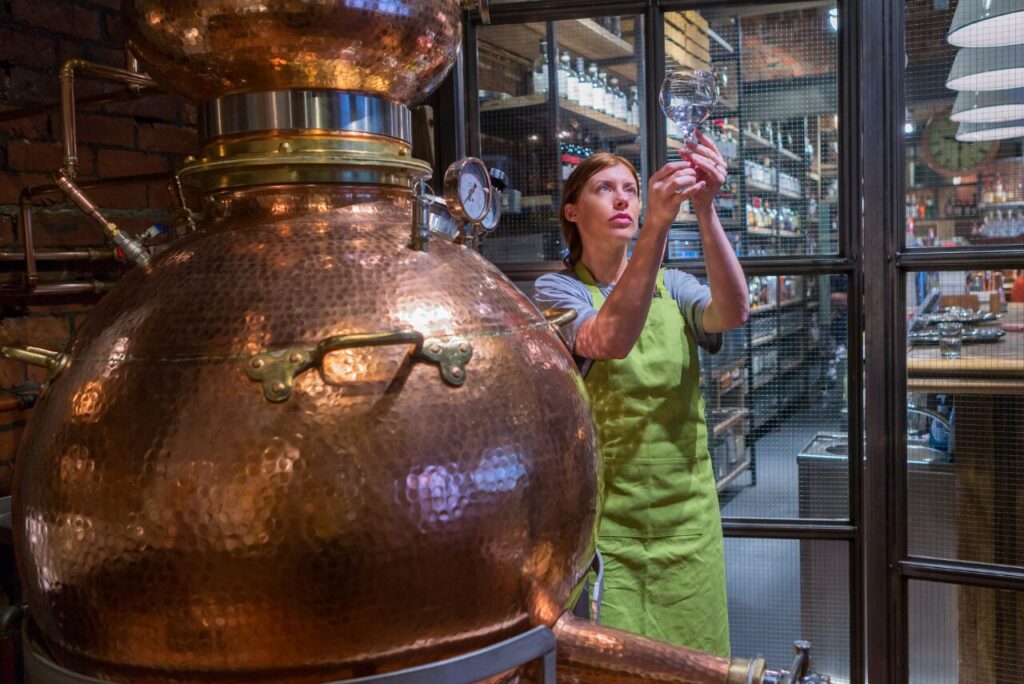
Once fermentation is complete, the wash is transferred to a still for distillation.
Distillation involves separating and condensing alcohol and aroma components.
For malt whisky, double distillation is the norm.
The low-alcohol liquid (low wines) obtained from the first distillation is distilled again to complete the “new make spirit” (with an alcohol content of about 70%).
In this process, factors such as the shape and material of the still, and the angle of the lyne arm, influence the flavor.
Maturation: The Magic of the Cask Completes the Whisky
The new make spirit obtained from distillation is filled into wooden casks, and maturation begins.
During the aging period, components dissolving from the cask wood are added to the spirit, enriching its aroma, flavor, and color.
The general maturation period is three years or more, and the type and size of the cask, as well as the aging environment (humidity, temperature), determine the whisky’s personality.
For example, Bourbon barrels impart vanilla aromas, while Sherry casks give sweet aromas like dried fruit.
Bottling: The Final Step to Commercializing Whisky
After maturation, the whisky is filtered, adjusted for alcohol content, and bottled.
In this process, distilleries may choose “chill filtration” to remove impurities or “non-chill filtration” to preserve natural flavors.
Label design and packaging are also important points in bottling.
These elements enhance the appeal of the product.
3. Key Points and Innovations in Whisky Making
Commitment to Ingredient Selection
While the basic ingredients of whisky are malt, water, and yeast, the quality of these ingredients determines the whisky’s character.
Malt, in particular, offers a choice between non-peated and peated malt, with peated malt adding a smoky aroma.
The selection of malt type and origin has a significant impact on the taste and aroma, so each distillery has its own unique preferences.
Water quality is also crucial.
In Japan, soft water with low hardness and few impurities is used in many distilleries.
Furthermore, since the esters and aroma components produced vary by yeast type, an increasing number of distilleries are culturing and using their own proprietary yeast.
Equipment for Whisky Production
Production equipment is a key element directly linked to whisky quality.
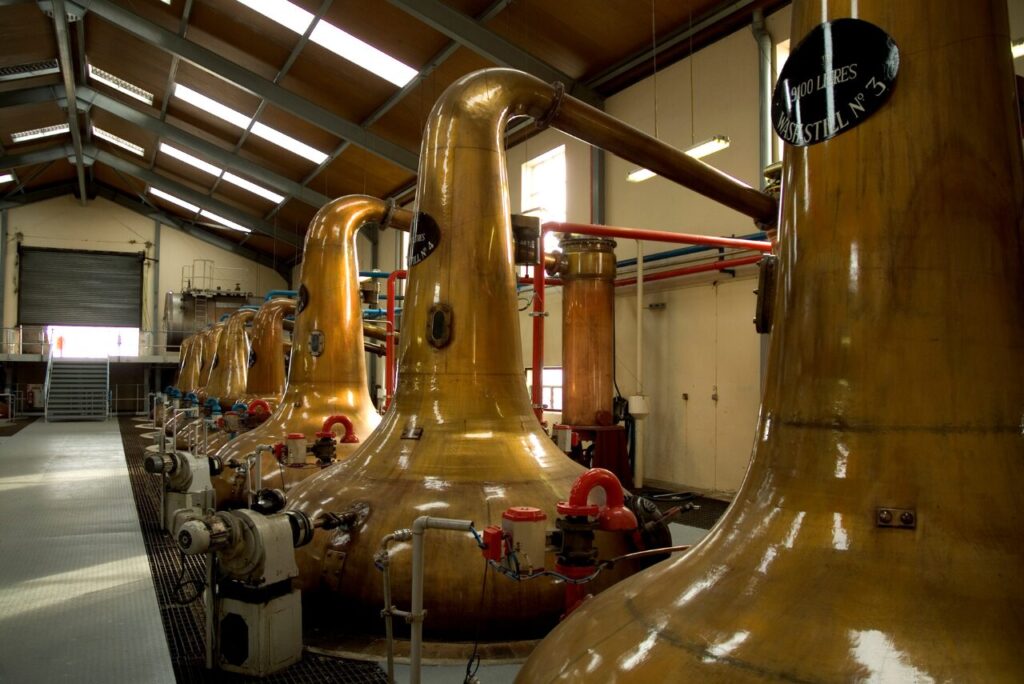
The shape and material of the pot still used for distillation particularly affect flavor.
For example, a pot still with a tall neck produces light flavors, while a short, thick shape creates a heavy, rich taste.
There are also choices between wooden and stainless steel washbacks (fermentation tanks).
Wooden tanks tend to produce traditional aromas, while stainless steel tanks are easier to control temperature and clean.
The choice depends on the distillery’s production style and the flavor profile they aim for.
The casks used for maturation are also an important part of the equipment.
Options include Bourbon barrels, Sherry casks, and Mizunara (Japanese oak) casks, all of which impart unique flavors and colors to the whisky.
Factors That Influence Aroma and Taste
The aroma and taste of whisky are formed by a complex interplay of many factors.
The following points play particularly large roles:
Maturation Environment Whisky maturation inside the cask is influenced by climate, humidity, and temperature.
While Japan’s humid environment accelerates maturation, it also increases the “angel’s share” (loss due to evaporation), requiring appropriate management.
Cask History and Type Flavor changes depending on whether new casks or reused casks are employed.
Reused casks (first-fill or second-fill) can add gentle flavors to the whisky.
Distillation Frequency and Temperature Control Usually, malt whisky is distilled twice, which removes off-flavors and increases alcohol concentration.
Also, by adjusting distillation temperature and speed, it is possible to draw out specific aroma components.
Regionality Since ingredients, techniques, and aging environments differ by region—such as Scotland, Ireland, and Japan—distinct differences in whisky styles emerge.
4. Summary
Whisky is a profound beverage completed through a long process using simple ingredients: malt, water, and yeast.
Its production process involves five major steps: mashing, fermentation, distillation, maturation, and bottling, with each step holding the key to creating unique tastes and aromas.
Additionally, attention to detail in ingredient selection, equipment, and environment determines the whisky’s personality.
As the number of craft whisky distilleries increases, innovations that leverage local climate and culture, in addition to ingredient and equipment choices, are gaining attention.
For instance, everything from how casks for aging are selected to securing water sources and culturing proprietary yeast affects the perfection of the whisky.
The charm of whisky production lies in its complexity and the crystallization of craftsmanship.
In this article, we have broadly explained everything from the basics of production to the steps and key points of innovation.
However, when taking on the challenge of whisky production, it is important to leverage your own passion and ideas.
Through whisky making, please enjoy the pleasure of creating your own special flavor.
[ForCompanies Considering Craft Whisky Production]
A Must-Read for Those Planning to Launch a Craft Whisky Distillery. Did you know that by integrating a microbrewery model, it is possible to produce craft whisky even on a small scale?
Furthermore, we offer a strategy to generate revenue even during the long maturation period.Why not consider launching your craft whisky business with Augst Beer?
We have a proven track record of supporting successful distillery launches across Japan.
[Request Information]