
Table of Contents
- Overview of Whisky Production Time
- What is the Total Time Required to Make Whisky?
- Legal Definitions of Maturation Periods
- The Impact and Secrets of Maturation
- How Maturation Affects Whisky
- The Role of Cask Types and Maturation Environment
- Short-Term vs. Long-Term Maturation
- Solving Common Questions About Whisky Production Time
- “Does Short Production Time Mean Inferior Quality?”
- “Does Long-Term Maturation Alone Determine Whisky’s Value?”
- Summary
- Key Points Regarding Whisky Production Time
- The Future of Whisky Production Time
1. Overview of Whisky Production Time
What is the Total Time Required to Make Whisky?
Making whisky requires a significant amount of time, from mashing to maturation and bottling.
Below is an approximate timeline for each production step.
From Mashing to Fermentation This process, where malt is mashed and fermented by yeast, usually takes about 5 to 7 days.
Once fermentation is complete, a liquid called “wash” (moromi) is produced.
Distillation Distillation is typically performed twice: the first distillation (to increase alcohol content) and the second distillation (to refine flavor components).
This process is completed within a few days.
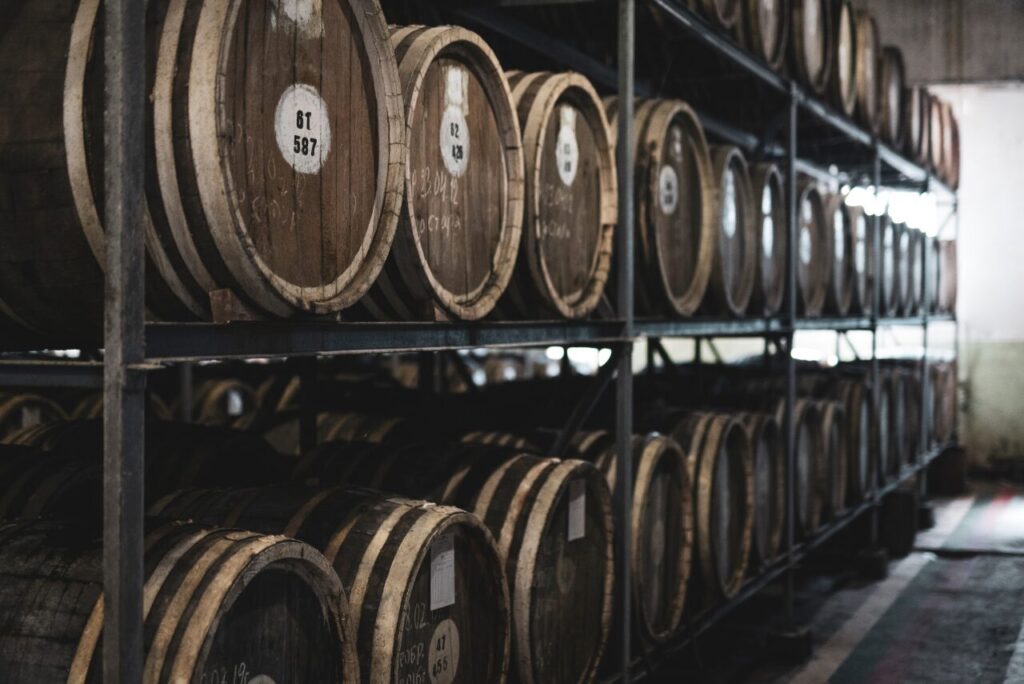
Maturation This is the most time-consuming step, requiring at least three years.
The length of maturation is a critical factor determining the taste and quality of the whisky, with some being aged for over 10 years.
Bottling After maturation, the whisky is filtered and adjusted before bottling.
This process usually takes from a few days to a few weeks.
Combining all these steps, a minimum of three years is required, and for general craft whisky, the production period often spans 5 to 10 years.
Legal Definitions of Maturation Periods
To be sold as “whisky,” the product must meet the minimum maturation periods stipulated by the laws of each country.
Here are examples of major regulations.
Japanese Whisky In Japan, to be recognized as whisky, the spirit must be matured in wooden casks for at least three years.
This adds depth to the taste and aroma, guaranteeing the product’s quality.
Scotch Whisky Scotch whisky is legally required to be matured for a minimum of three years.
Furthermore, Scotland’s unique cool climate enables long-term maturation, resulting in globally acclaimed Scotch whisky.
American Bourbon Whiskey Bourbon whiskey is generally required to be matured, but for “Straight Bourbon,” maturation of two years or more is required.
Additionally, it is a condition that new charred oak barrels must be used.
2. The Impact and Secrets of Maturation
How Maturation Affects Whisky
The maturation period of whisky has a profound effect on its flavor, aroma, and texture.
As maturation progresses, the following changes occur:
Evolution of Flavor: During maturation, the sharpness of the alcohol softens, and rich flavors such as vanilla, caramel, and fruit are extracted from the cask.
Improvement of Texture: The longer the maturation period, the smoother and more balanced the whisky becomes.
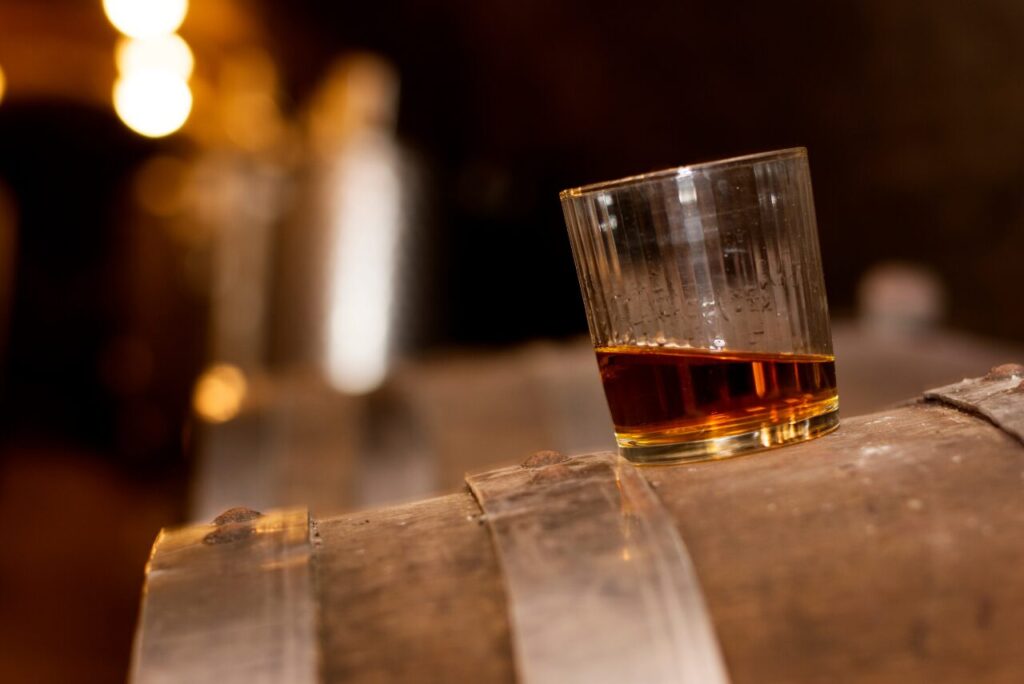
Change in Color: Fresh, colorless spirit absorbs pigments from the cask during maturation, changing from clear to golden or amber.
Since these changes proceed gradually over time, the maturation period greatly influences the quality of the whisky.
The Role of Cask Types and Maturation Environment
“Casks” and “Environment” play major roles in whisky maturation.
Cask Types
- American Oak: Characterized by vanilla and caramel aromas. Frequently used for Bourbon whiskey.
- European Oak: Provides fruity and spicy flavors, often used for Sherry casks.
- Mizunara Cask (Unique to Japan): Brings distinctive aromas of sandalwood and incense.
Maturation Environment
- Temperature and Humidity: Maturation progresses quickly in warm environments and slowly in cool environments. Scotch whisky is characterized by a cool climate, while Bourbon whiskey is known for a warmer climate.
- Angel’s Share: This is the amount of whisky that evaporates during maturation, and the rate varies by environment. For example, in high-humidity environments, more alcohol evaporates, whereas in dry environments, more water evaporates.
The selection of casks and management of the maturation environment are crucial points for producers to control the whisky’s personality.
Short-Term vs. Long-Term Maturation
Short-Term Maturation Some craft whiskies are testing innovative technologies to shorten the maturation period.
Examples include methods using special casks or pressure to accelerate maturation.
This results in flavor-rich whisky even within a short period.
Long-Term Maturation Long-term maturation gives depth and complexity to the flavor, but challenges include loss due to evaporation in the cask and increased costs.
For example, maturation of over 20 years requires immense time and resources, but consequently, rarity increases, tending to trade at high prices.
Both short-term and long-term maturation have their own unique charms and are selected according to the objective.
3. Solving Common Questions About Whisky Production Time
“Does Short Production Time Mean Inferior Quality?”
Generally, whisky with a short maturation period may be viewed as “inferior in quality.”
However, this is not necessarily correct.
Considering the following points, we can see that short-term matured whisky also has its own unique appeal.
Fresh and Clear Flavors Short-term matured whisky allows the flavors derived from grains and fermentation to be felt directly, characterized by a fresh and light taste.
Complementation by Modern Technology By utilizing high-performance casks and maturation acceleration technologies (e.g., using ultrasound or high pressure), it is possible to draw out sufficient flavor even in a short time.
Factors Other Than Maturation Affect Quality Whisky quality depends heavily on steps other than maturation, such as ingredient selection and the precision of fermentation and distillation.
If these are of high standard, excellent quality whisky can be made even with short-term maturation.
Short-term matured whisky offers a free charm not bound by traditional long-term maturation.
“Does Long-Term Maturation Alone Determine Whisky’s Value?”
Long-term matured whisky is certainly highly rated for its rarity and complex taste.
However, that is not the only standard for whisky value.
Considering the following points reveals diverse values.
Unique Flavors Regardless of maturation period, ingredients, distillation methods, and cask selection give whisky a unique personality.
Especially in craft whisky, many unique products appear even with short periods.
Market Diversification As consumer preferences diversify, demand is increasing for light, easy-to-drink whiskies and types suitable for pairing with food.
These are often born from flexible manufacturing approaches that are not fixated on long-term maturation.
Consideration for Cost and Environment Long-term maturation requires enormous costs and energy.
On the other hand, short-term maturation reduces environmental load and contributes to sustainable whisky making.
Long-term maturation is an element symbolizing the “depth” of whisky, but it is not everything.
Diverse options, including short-term maturation, are enriching modern whisky culture.
4. Summary
Key Points Regarding Whisky Production Time
The production period of whisky is a critical element that greatly influences its taste and quality.
Here, we briefly summarize the points explained in this article.
Overview of Production Period
- Total Production Time: Making whisky requires several years to decades, including steps like distillation, maturation, and bottling.
- Legal Standards: In Japan, maturation of three years or more is mandatory. The evolution of flavor during this time guarantees the quality of the whisky.
Impact of Maturation Period
- Role of Maturation: The maturation period enriches whisky flavor, and components from the cask give complexity to the whisky.
- Impact of Casks and Environment: The type of cask used (American Oak, Sherry Cask, etc.) and the maturation environment (climate and humidity) have a major impact on the final taste of the product.
Questions About Production Period
- Short-Term Maturation: By utilizing high-performance equipment and technology, it is possible to make high-quality whisky even in a short period. The freshness of short-term maturation is gaining popularity among new consumer demographics.
- Value of Long-Term Maturation: The complex flavor and depth from long-term maturation are supported by many enthusiasts, but it is not the only standard of value.
The Future of Whisky Production Time
Whisky production periods are evolving against a backdrop of new technologies and diverse consumer needs.
While respecting the tradition of long-term maturation, short-term maturation is also attracting attention.
It seems that future whisky will see a wider range of choices in production periods, becoming even more diverse.
[ForCompanies Considering Craft Whisky Production]
A Must-Read for Those Planning to Launch a Craft Whisky Distillery. Did you know that by integrating a microbrewery model, it is possible to produce craft whisky even on a small scale?
Furthermore, we offer a strategy to generate revenue even during the long maturation period.Why not consider launching your craft whisky business with Augst Beer?
We have a proven track record of supporting successful distillery launches across Japan.
[Request Information]
 master