
Table of Contents
- 1: What is a Whisky License?
- 2: What Are the Conditions for Obtaining a Whisky License?
- 3: The Procedure Flow Until Obtaining a Whisky License
- 4: Location and Facility Requirements for a Whisky Distillery
- 5: Points to Note and Common Pitfalls When Obtaining a Whisky License
- 6: Summary
1: What is a Whisky License?
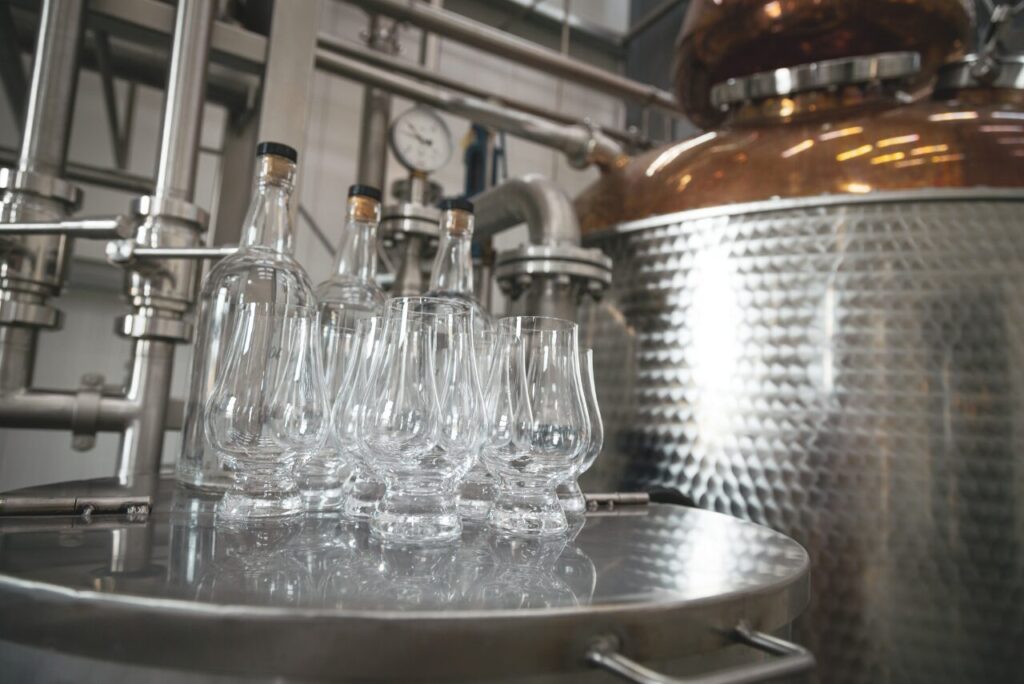
To manufacture whisky, it is mandatory to obtain a “Spirits Manufacturing License,” which is a specific category under the broader Liquor Manufacturing License.
This is because whisky is an alcoholic beverage manufactured through a distillation process, rather than just fermentation.
The Liquor Manufacturing License Required for Whisky Production
A Liquor Manufacturing License is an official permit issued by the National Tax Agency and the local tax office to manufacture and sell alcoholic beverages.
Within Japan, this license is required to produce anything classified as “liquor” under the Liquor Tax Act.
Under the Liquor Tax Act, whisky falls under the category of “Spirits.”
In other words, because it is necessary to distil the fermented liquid, a different license is required compared to the ones used for standard beer or wine.
Classification of Spirits Manufacturing Licenses
The Spirits Manufacturing License is broadly divided into the following two categories.
| Type | Main Use | Distillation Method |
| License for Pot Still Spirits | Shochu, Awamori, Craft Whisky, etc. | Pot Still |
| License for Continuous Still Spirits | Vodka, Mass-produced Whisky, etc. | Column Still |
When making craft whisky, it is common to acquire the License for Pot Still Spirits.
This is suitable for flavorful, small-batch whisky manufactured using a pot still.
Mass-produced whiskies handled by major corporations use column stills with an emphasis on efficiency.
In that case, the License for Continuous Still Spirits is required.
What Type of License Applies to Craft Whisky?
When individuals or small corporations launch a whisky distillery, they generally apply for the License for Pot Still Spirits.
The beverages that can be manufactured using this license include not only Shochu and Awamori but also spirits like whisky and brandy.
The important point here is that you must clearly demonstrate whether your product complies with the manufacturing methods and definitions under the Liquor Tax Act.
In short, you are required to be specific about what you will make, the equipment you will use, and the production volume.
2: What Are the Conditions for Obtaining a Whisky License?
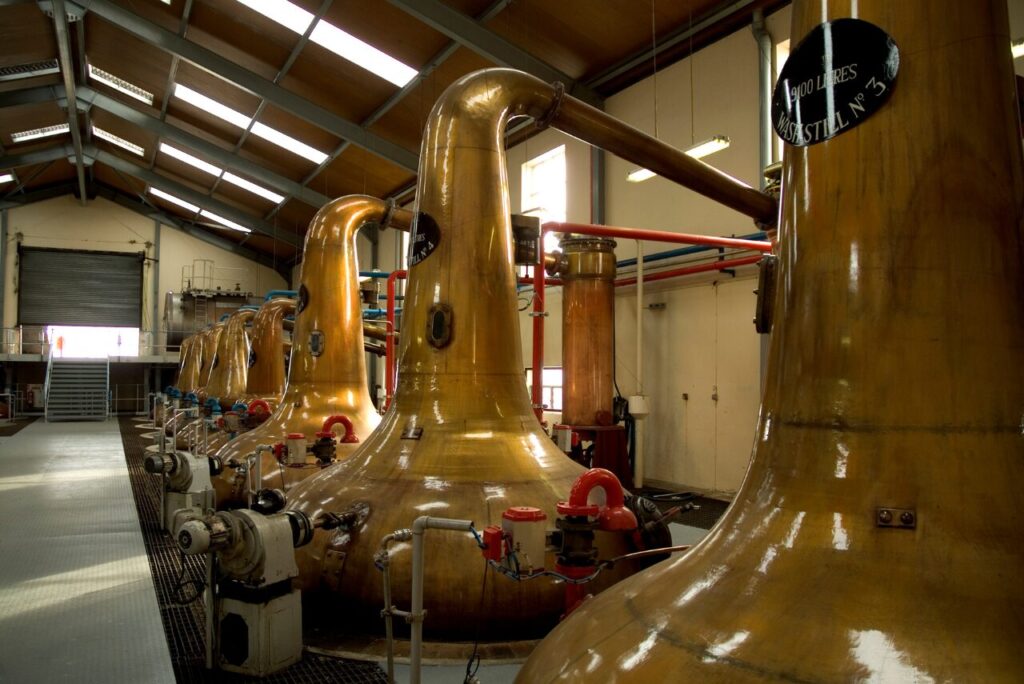
To obtain a whisky manufacturing license, you must clear four strict examination conditions.
These are the four pillars: Production Volume, Economic Requirements, Human Requirements, and Physical Requirements.
The National Tax Agency conducts a comprehensive examination based on these criteria to determine whether to issue the license.
Standard for Annual Production Volume
Based on the Liquor Tax Act, obtaining a license requires meeting a certain expected annual production volume.
The minimum production volume for a License for Pot Still Spirits is 6 kiloliters per year.
This basically remains the same regardless of where you apply in Japan.
If your equipment or business plan can only produce a smaller amount, it will be judged that there is no demand or commercial viability, and the license will not be granted.
Economic Requirements
During the license examination, authorities strictly check whether there is financial backing to conduct the business continuously.
The main evaluation points are as follows.
- The presence and amount of self-funding.
- The plan for initial investment required for equipment introduction and facility maintenance.
- An income and expenditure plan for several years, including raw material procurement, labor costs, and utility costs.
- Whether the business has sustainability and growth potential.
If the plan is unclear or funds are insufficient, the application may be rejected during the examination.
Especially since whisky does not generate immediate sales, a plan that includes cash flow during the maturation period is necessary.
Human Requirements
Whether personnel with knowledge of laws and liquor tax management are appropriately assigned is also an important judging criterion.
- The Liquor Manufacturing Manager must have an understanding of the manufacturing process.
- The assignment of a Liquor Tax Manager to accurately declare and manage product shipment volumes and inventory.
- Whether there are experienced technicians and operators involved.
The Regional Taxation Bureau will check from the perspective of whether a system is truly in place to properly pay liquor taxes.
Physical Requirements
Fulfilling the following hardware aspects is also indispensable for obtaining a license.
- The presence of equipment necessary for manufacturing, such as stills, mash tuns, fermentation tanks, and maturation casks.
- The structure of the manufacturing facility must have proper hygiene management and safety measures.
- The factory and maturation warehouse must maintain a sufficient distance from surrounding residential areas and schools to avoid noise and odor issues.
Additionally, while it is acceptable for the manufacturing site and the maturation warehouse to be physically separated, you must clearly show this by attaching blueprints for each at the time of application.
3: The Procedure Flow Until Obtaining a Whisky License
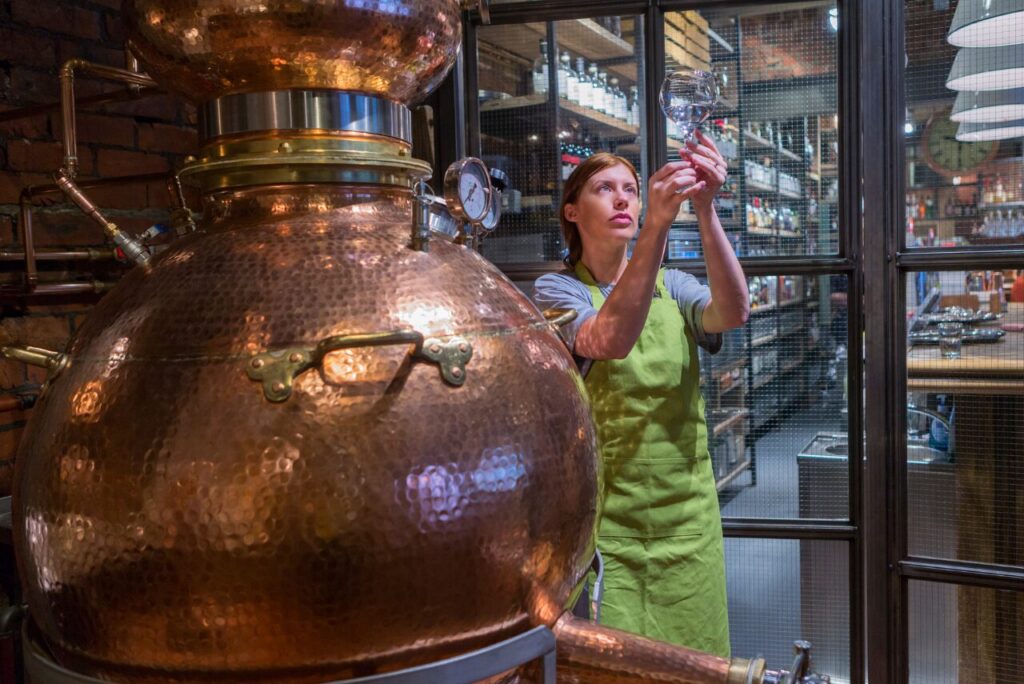
To manufacture whisky, you must formally apply for a Liquor Manufacturing License for spirits after meeting the conditions mentioned in the previous chapter.
In this chapter, we will explain in detail the flow until obtaining the license, required documents, the examination period, and points for passing.
Flow and Schedule from Prior Consultation to Application
For a license application, you cannot simply submit documents out of the blue.
You must start by holding a prior consultation with the local tax office having jurisdiction and conveying your intention to apply for a license.
The general flow is as follows.
- Prior Consultation: Present an overview of your business plan, manufacturing details, and the concept of your manufacturing equipment to the tax office.
- Preparation of Required Documents: Once the details of the plan are clear, prepare the specific application documents.
- Formal Application: Submit the documents to the tax office.
- Examination and Supplementary Responses: The Regional Taxation Bureau reviews the application.
- Approval and License Issuance: The license is officially granted.
As a rough schedule, the period from prior consultation to application takes about 1 to 3 months, and from application to approval takes about 3 to 6 months.
In many cases, the entire process takes about six months to a year.
List of Required Documents and Points to Note
The main documents to be submitted are as follows.
| Document Name | Overview |
| Liquor Manufacturing License Application Form | Applicant information, type of liquor to be manufactured, etc. |
| Location, Layout, and Equipment Diagrams | Blueprints detailing the address, structure, and equipment. |
| Manufacturing Method Document | Detailed description of the whisky manufacturing process. |
| List of Raw Materials and Expected Production Volume | Malts and yeast to be used, expected production volume, etc. |
| Business Plan and Financial Plan | Sales, cost, and profit plans for 3 to 5 years. |
| Fund Procurement Plan | Breakdown of self-funding, borrowings, and cash flow plan. |
| Roster of Executives and Resumes | Documents showing the background of the management team and the capability of the responsible persons. |
The key point is that you are required to logically explain that the project is commercially feasible, not just driven by passion.
If the tax authorities have unclear points, they will request supplementary explanations or corrections, which will prolong the examination.
Therefore, the accuracy of the initial documents is extremely important.
Examination Period and Estimated Time Until Approval
The period from when you apply until the decision on the license is made is about 3 to 6 months.
The examination period varies depending on the scale and content of the project and the perfection level of the submitted documents.
During the examination, there are many cases where the submission of supplementary materials or additional explanations is requested.
Building a relationship with the tax office in advance will make these responses smoother.
Points Emphasized in the Examination and Prior Preparation
Below are the items that the Regional Taxation Bureau particularly emphasizes during the examination.
- Whether the production volume exceeds the minimum standard of 6kL.
- Whether the cash flow is appropriately designed.
- Whether the equipment and factory comply with laws and regulations.
- Whether the tax management and tax payment systems are established.
- Whether the representative and manufacturing manager have reliable backgrounds and capabilities.
Whether you can explain these points clearly and logically during the prior consultation will greatly influence your passing rate.
4: Location and Facility Requirements for a Whisky Distillery

To obtain a whisky manufacturing license, it is also mandatory to prepare land, buildings, and equipment suitable for manufacturing.
To pass the examination, you need a plan that not only complies with the Liquor Tax Act and building regulations but also considers coexistence with local residents and safety.
Legal Regulations to Note When Selecting a Location
The location of a distillery is not as simple as just using an empty warehouse or an old folk house.
You must select a location from the following perspectives.
- Confirmation of Zoning Districts: You must check with the local government in advance whether the area can be used for factory purposes.
- Consideration for Odor and Wastewater Treatment: Because aromas are generated during fermentation and distillation, there are concerns about trouble with residents in densely populated residential areas.
- Traffic Access and Logistics: A location easily accessible by trucks is desired for bringing in raw materials and shipping products.
In rural areas, many local governments are proactive about utilizing empty facilities.
Therefore, you may be able to receive subsidies and preferential treatment aimed at regional promotion and industrial support.
Relationship with the Building Standards Act and Fire Service Act
Because a distillery handles fire and alcohol, you must pay close attention to the following legal regulations.
- Building Standards Act: An application for building confirmation is required when changing the use of a building or renovating it.
- Fire Service Act: Ethanol used in the distillation process falls under flammable liquids and must meet the standards for specific fire prevention properties.
Prior consultation with the fire department is highly recommended.
For example, storing alcohol exceeding a certain amount requires explosion-proof equipment, fire extinguishers, and exhaust systems.
The obligation to install fire alarms and guide lights also arises.
Especially when using old folk houses or wooden buildings, renovation costs often become larger than expected.
It is important to scrutinize this during the planning stage.
Specific Examples of Factory Area, Structure, and Installed Equipment
To be recognized as appropriate as a manufacturing facility, it is recommended to meet the following conditions.
- Area Guideline: Generally 100 to 300 square meters or more to secure manufacturing, storage, and workflow space.
- Structure: Concrete, steel frame, and non-combustible materials are desirable.
- Workflow Design: A layout where the flow from raw material delivery to mashing, fermentation, distillation, barreling, and shipping is clear and operations can be performed safely.
Here are the main pieces of equipment to be introduced.
| Equipment | Purpose | Points to Note |
| Pot Still | Alcohol extraction | Legal regulations apply depending on material, capacity, and heat source. |
| Mash Tun and Fermentation Tank | Malt mashing and yeast fermentation | Temperature control is crucial. |
| Cooling System and Piping | Steam cooling and post-extraction processing | Cooling water management is required. |
| Boiler and Heat Source Equipment | Necessary for distillation and sterilization | Subject to the Fire Service Act as fire-using equipment. |
Basics of Maturation Warehouse Design and Humidity/Temperature Control
The maturation warehouse is an extremely important space that influences the quality of whisky.
The key points are as follows.
- Structure: A wooden or insulated structure that can utilize the temperature difference of the outside air is ideal.
- Size: When obtaining the license, assume that it is possible to mature at least about 50 casks.
- Temperature and Humidity Control: As a guideline, aim for a temperature of 15 to 25 degrees Celsius and a humidity of 60 to 80 percent.
- Safety: Ventilation and fire prevention measures are required to prevent ignition caused by alcohol volatilization.
Even if the maturation warehouse is a separate building, it must be included in the license application as part of the manufacturing site.
Please present it with blueprints and photographs.
5: Points to Note and Common Pitfalls When Obtaining a Whisky License
Obtaining a Liquor Manufacturing License is not something anyone can do just by preparing documents.
High hurdles and strict examination criteria are set, and even trivial flaws can lead to rejection.
In this chapter, we explain the points to note and common examples of failure that those aiming to open a craft whisky distillery should be particularly careful about.
Typical Cases Where a License Cannot Be Obtained
In the following cases, it is said that applications are very often rejected during the examination stage.
| Case | Reason |
| Expected annual production is less than 6kL | Does not meet the minimum production volume under the Liquor Tax Act. |
| Financial plan is unclear | Lack of consistency in self-funding and income plans raises doubts about sustainability. |
| Equipment is uninstalled or undetermined | Considered a theoretical plan with no substance. |
| Insufficient agreement with residents | Easy to be judged as having friction with the community due to complaint risks. |
| Manager lacks knowledge of liquor laws | Considered a risk of management failure and tax non-compliance. |
Especially with approaches like “I just want to give it a try” or “testing it at home,” the application will almost certainly be rejected.
Feasibility, continuity, and safety as a legitimate business are strictly required.
Risk of Violating the Liquor Tax Act and the Possibility of Business Suspension
Even after obtaining a license, if proper operations are not conducted, you will be subject to business suspension, license revocation, and penalties.
In fact, there have been cases in the past where disciplinary actions were taken for the following violations.
- False declaration of production volume and inventory.
- Maturation and bottling in unauthorized areas.
- Flawed bookkeeping and omission of tax declarations.
These risks can occur even without malicious intent, simply due to a lack of knowledge or operational mistakes.
Therefore, even after obtaining the license, a system of collaborating with experts such as tax accountants and administrative scriveners is important.
Differences from the “Liquor Sales License” and Commonly Misunderstood Points
What beginners tend to confuse the most is the difference between a Liquor Manufacturing License and a Liquor Sales License.
| Item | Manufacturing License | Sales License |
| Jurisdiction | National Tax Agency | Prefectural Tax Office, etc. |
| Content | License to make whisky | License to sell to general consumers |
| Types | Pot still, continuous still, etc. | General retail, mail order, for restaurants, etc. |
| Are both needed? | Yes, if you manufacture and sell your own products. | Yes, if you manufacture and sell your own products. |
In other words, if you want to make and sell whisky, you need both a manufacturing license and a sales license.
The general flow is to apply for a sales permit after the manufacturing license has been granted.
Also, since there are multiple types of sales licenses, such as those exclusively for e-commerce or limited to retail for restaurants, you are required to apply according to your company’s sales method.
6: Summary
We have seen that obtaining the whisky license required to launch a craft whisky distillery demands clear criteria and careful preparation.
Acquiring a whisky manufacturing license requires solid foundations such as legal compliance, planning, financial strength, and specialized knowledge.
However, at the same time, what the examiners are looking at is whether that business truly has a future.
In other words, your vision and passion regarding whether it has sales prospects, whether it contributes to the community, and whether it can make drinkers happy are also keys to obtaining the license.
We hope this article serves as a useful guide for everyone taking their first step toward the dream of manufacturing whisky in Japan.
[ForCompanies Considering Craft Whisky Production]
A Must-Read for Those Planning to Launch a Craft Whisky Distillery. Did you know that by integrating a microbrewery model, it is possible to produce craft whisky even on a small scale?
Furthermore, we offer a strategy to generate revenue even during the long maturation period.Why not consider launching your craft whisky business with Augst Beer?
We have a proven track record of supporting successful distillery launches across Japan.
[Request Information]